
News
- News
- Private Healthcare Faces Funding Challenges: Financial Leasing Opens Up New Opportunities to Invest in Modern Medical Equipment
Private Healthcare Faces Funding Challenges: Financial Leasing Opens Up New Opportunities to Invest in Modern Medical Equipment
The need to upgrade technology and develop high-quality healthcare services is creating significant growth potential for Vietnam’s medical equipment market. However, limited access to medium- and long-term financing remains a barrier for private hospitals and clinics. In this context, financial leasing is emerging as a noteworthy financing channel, enabling healthcare providers to access modern equipment, ease the burden of upfront investment, and gain greater flexibility in planning their development.
Growing Investment Needs and the Challenge of Securing Financing
“Without investment in technology, private healthcare providers will struggle to survive; however, not every private healthcare facility has the financial resources to address this challenge.” This observation, made at the 2nd Vietnam Private Healthcare Development Forum 2026, organized by the Vietnam Private Hospital Association (VPHA) in Ho Chi Minh City, reflects one of the major challenges currently facing the private healthcare sector: growing investment needs amid limited access to suitable sources of financing.
Given its reliance on specialized technologies, high-value medical equipment, and frequent equipment upgrades, healthcare is a capital-intensive sector. According to Mr. Pham Xuan Hoe, Secretary General of the Vietnam Leasing Association, a medium-sized general hospital with 200–300 beds may require an investment of several hundred billion Vietnamese dong, potentially reaching thousands of billions of dong if developed to modern standards. Medical equipment alone can account for approximately 40–60% of total investment.
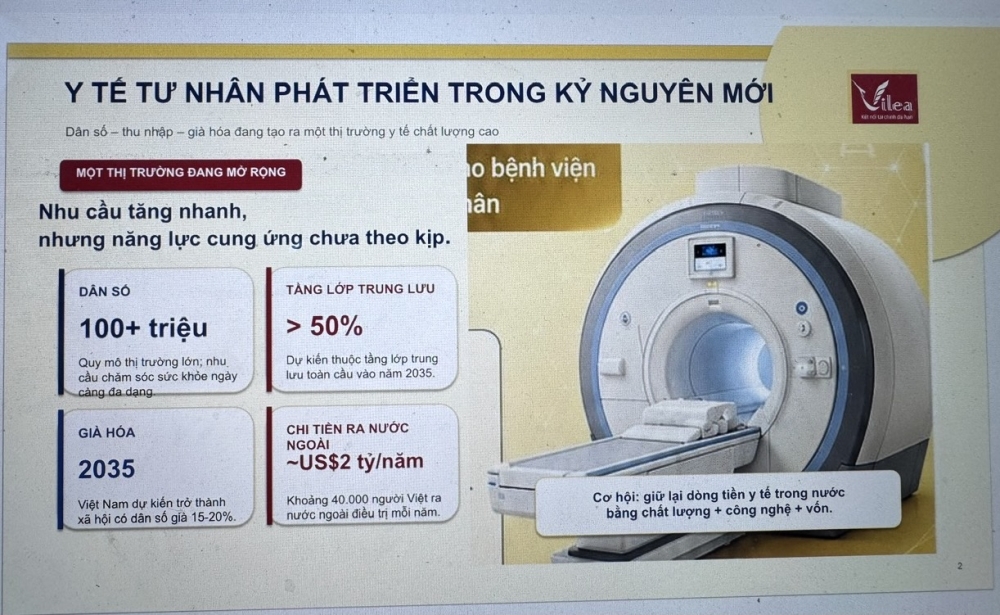
Given its reliance on specialized technologies, high-value medical equipment, and frequent equipment upgrades, healthcare is a capital-intensive sector.
In practice, the cost of many high-tech diagnostic and treatment devices has become a significant barrier for private healthcare providers. A 3 Tesla magnetic resonance imaging (MRI) system may cost VND 40–80 billion; a CT scanner with 128–512 slices may cost approximately VND 20–70 billion; and a positron emission tomography/computed tomography (PET/CT) system may cost as much as VND 60–120 billion. Surgical robots and cancer radiotherapy systems can require investments amounting to hundreds of billions of dong.
According to information cited at industry forums and in sector reports, Vietnam’s medical equipment market was valued at nearly USD 1.7 billion in 2024. Some forecasts suggest that the market could reach USD 2.5–4 billion annually over the coming decade. Meanwhile, more than 90% of medical equipment remains dependent on imports. These factors indicate that investment in modern equipment will continue to place pressure on healthcare providers’ financial resources in the years ahead.
At the same time, many private hospitals and clinics have been unable to mobilize capital at a pace that matches their development needs. Equity capital is often limited, while access to the stock market or bond issuance is generally more suitable for healthcare businesses with a certain scale and level of financial strength. Bank lending remains an important financing channel, but not every healthcare provider can meet requirements relating to collateral, credit documentation, and repayment plans. In addition, loan maturities and repayment schedules must be aligned with the useful life of the equipment and the facility’s ability to generate cash flow. If financing is short-term while the equipment requires several years to deliver its full investment benefits, the resulting financial pressure may affect expansion plans.
This challenge is becoming increasingly significant as demand for high-quality healthcare services in Vietnam continues to grow. The country’s large population, aging demographic, and expanding middle class are creating greater opportunities for specialized medical examinations and treatment, diagnostic imaging, advanced medical procedures, and personalized healthcare services.
Resolution No. 72-NQ/TW dated September 9, 2025, issued by the Politburo on breakthrough solutions to strengthen the protection, care, and improvement of public health, also emphasizes mobilizing social resources, promoting private healthcare development, and encouraging investment in high-quality healthcare services and hospitals with advanced technical capabilities. This provides an important policy foundation for the private sector to participate more deeply in the national healthcare system, while also highlighting the need for appropriate financing solutions to turn investment demand into reality.
Financial Leasing: Aligning Financing with Assets and Operating Cash Flow
Against this backdrop, financial leasing is an option worth considering for hospitals and clinics that need to invest in equipment while seeking to limit the pressure of raising substantial upfront capital. According to Mr. Pham Xuan Hoe, financial leasing can provide medium- and long-term financing for machinery and equipment, with lease terms structured to better match the planned utilization of the assets. In particular, the asset acquired through a financial leasing transaction plays an important role in the transaction structure, offering an alternative approach to financing compared with traditional loans that rely heavily on additional collateral.
The difference can be illustrated through a hypothetical example: a private hospital needs to invest in an imported 3 Tesla MRI system with a total value of VND 60 billion.
Under a traditional bank loan arrangement, the hospital may need to provide its own funds for the required equity contribution while also meeting the bank’s collateral requirements. Assuming an equity contribution of 30%, the hospital would need to provide VND 18 billion and raise the remaining VND 42 billion through borrowing. If additional real estate or other assets were required as collateral, the healthcare provider could face further pressure on its financial resources.
Meanwhile, under a financial leasing arrangement, the lessee may be considered for a financing ratio, an initial amount to be arranged by the customer, and a payment schedule determined based on the financial leasing company’s policies, the characteristics of the equipment, and the results of the customer assessment. In this hypothetical example, for an MRI machine valued at VND 60 billion, the hospital may be considered for financing of up to 100% of the equipment’s value, equivalent to VND 60 billion, with the MRI machine itself serving as collateral for the financial leasing transaction. The lease term may extend from 7–10 years, in line with the equipment’s operating life and its ability to generate revenue. Under a financial leasing transaction, the financial leasing company purchases the equipment at the customer’s request and retains ownership throughout the lease term. The healthcare facility directly uses the equipment and makes lease payments in accordance with the contract. This structure may help reduce the need to provide additional collateral, subject to the financing policy and assessment results in each individual case.
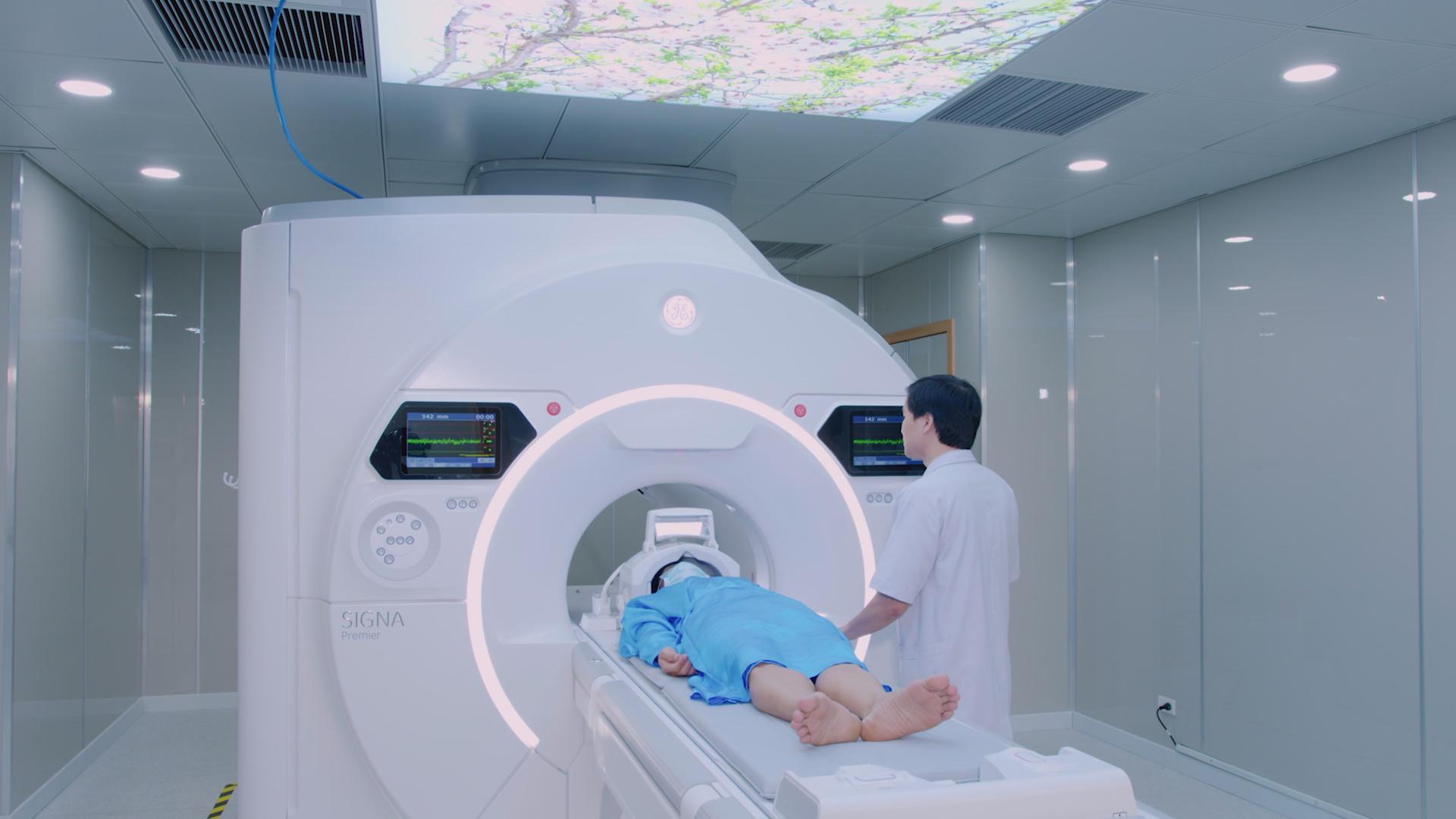
Financial leasing can provide medium- and long-term financing for machinery and equipment, with lease terms structured to better match the planned utilization of the assets.
According to Mr. Hoe, the key advantage of this approach lies not only in reducing the upfront capital burden but also in the potential to align payment obligations with the returns generated by equipment utilization. For example, if an MRI system performs an average of 35 scans per day, with an average fee of VND 1.5 million per scan, and operates 250 days per year, revenue from scanning services could reach approximately VND 18.4 billion annually, before deducting operating expenses, personnel costs, maintenance, consumables, and other related costs.
This calculation is intended to illustrate potential revenue and does not constitute a guarantee of business performance or the ability to meet lease payment obligations. In practice, an investment proposal must be evaluated based on market demand, projected utilization rates, cost structure, competitive conditions, and the cash flow of each healthcare facility.
Another advantage of financial leasing is that it can help healthcare providers select equipment that meets their clinical needs more proactively. Rather than committing a large amount of capital to fixed assets at the outset, hospitals can allocate their resources more flexibly to other activities, such as developing medical specialties, recruiting highly qualified personnel, upgrading facilities, and improving service quality.
In addition to financing new equipment, sale-and-leaseback arrangements under financial leasing also offer a way to address capital constraints for healthcare providers that already own and operate equipment.
Under this arrangement, a healthcare provider sells an eligible asset to a financial leasing company and then leases the same asset back for continued use, subject to the applicable transaction requirements and assessment procedures. The proceeds from the transaction can help the healthcare provider supplement its working capital, restructure its funding, or finance expansion plans while continuing to use the equipment.
For example, a hospital may have initially invested its own funds in a diagnostic imaging system. When it seeks to expand into additional medical specialties or develop a new facility, it may find that a substantial portion of its capital is tied up in fixed assets, while its need for cash to support day-to-day operations continues to increase. If the asset meets the transaction requirements, a sale-and-leaseback arrangement may enable the hospital to convert part of the asset’s value into funding for other financial objectives.
However, the benefits of this approach must be assessed by considering the overall transaction costs, payment obligations throughout the lease term, the asset’s value, and the ability to generate cash flow. It is not a solution suitable for every healthcare provider and must be evaluated in light of each facility’s specific financial position and business plan.
From a legal perspective, Vietnam’s 2024 Law on Credit Institutions stipulates that financial leasing companies may conduct financial leasing activities and purchase assets for subsequent leaseback under financial leasing arrangements. This provides an important legal basis for businesses seeking to invest in assets for their production and business operations to consider this additional source of medium- and long-term financing.
For the private healthcare sector, the value of medical equipment lies not only in the assets themselves but also in their ability to support diagnosis and treatment and generate revenue throughout their useful lives. Therefore, choosing an appropriate financing solution requires a comprehensive assessment of the relationship between investment value, equipment lifespan, and projected cash flow.
When implemented on the basis of rigorous assessment and a financially viable plan, financial leasing can help diversify funding sources for private hospitals and clinics, reduce the burden of raising upfront capital, and support the modernization of medical equipment. This approach deserves greater attention as demand for high-quality healthcare continues to rise and the need for efficient capital utilization and stronger competitiveness among healthcare providers becomes increasingly apparent.
BIDV–SuMi TRUST Financial Leasing Co., Ltd. (BSL) provides financial leasing solutions for machinery and equipment used in production and business activities. For private healthcare facilities, financing options are considered based on each customer’s investment needs, the characteristics of the equipment, and financial capacity. By helping businesses access assets for their operations through suitable payment arrangements, financial leasing can help reduce the initial investment capital burden, improve the efficiency of resource utilization, and create greater room for long-term development plans. As the healthcare sector places increasing emphasis on technology investment and service quality improvement, financial leasing is one of the financing solutions that private healthcare facilities can explore and consider based on their investment needs and financial capacity.
Compiled by Thao Nguyen
(Reference sources: Economic and Financial Magazine; Vietnam Financial Times)